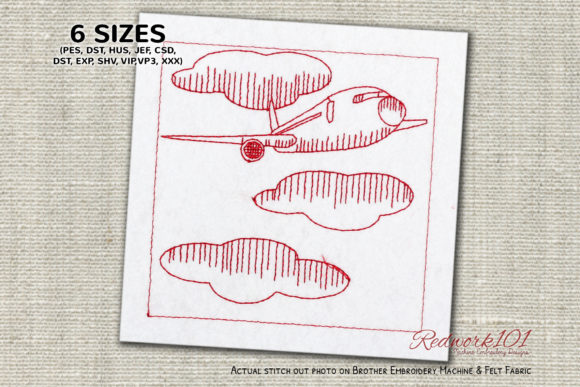
Airplane in Sky Design: A Maker's Honest Stitching Review
When I first opened the Airplane in Sky Design, I immediately thought of a client project I had been planning for a travel-themed boutique collection. As an embroidery designer who tests dozens of files each month, I've learned to look beyond the digital mockup and imagine how a design will breathe on fabric. This redwork piece promised simplicity, but the real question was whether its charm would hold up on a tote bag, a baby onesie, or even a sleek sweatshirt after a few washes.
What the Airplane in Sky Design Brings to the Table
The artwork is a clean line-drawn airplane floating through a minimal sky, with a few accent details that give it motion. Redwork — or really any single-color running stitch style — has a quiet confidence that digital embroidery sometimes overlooks. This isn't a dense, fill-heavy beast that will pucker a thin cotton tee. It's a light, airy design that feels almost like a hand-drawn sketch stitched into fabric. The optional box stitch adds a frame, which immediately told me this design could serve as a focal point on a pocket, a patch, or a centered chest logo. The product details note that the box color is often shown differently from the main thread, which means you have creative control: match the plane's red, choose a contrasting navy, or even skip the box entirely for a more organic, uncontained look.
Real-World Test: Stitching a Custom Travel Tote
I decided to put the Airplane in Sky Design through its paces on a 12-ounce canvas tote bag. The goal was a set of five totes for a local travel agency's client gifts — elegant but playful enough to appeal to frequent flyers. I loaded the design in a 5x7 hoop, hooped the tote with a medium-weight cutaway stabilizer, and chose a deep crimson thread for the airplane and clouds, while using a muted charcoal for the box stitch. The first stitch-out was a revelation: the running stitches settled into the canvas with zero distortion, and the crisp outline gave it an almost retro travel poster vibe. The box frame, when I kept it, added enough structure that the design didn't feel lost on the large tote face. Without the box, the airplane felt a touch naked on such a spacious background, but it would be perfect for a smaller item like a key fob or a baby bib.
Why Redwork Wins on Tricky Fabrics
Many stitchers worry about embroidery on stretchy or textured fabrics. The Airplane in Sky Design is inherently friendly to those situations. Because it relies on running stitches rather than dense satin fills, there's less pull on the fibers. I tested it on a soft French terry sweatshirt — no puckering, even around the propeller and tiny wing tips. Still, you must use a proper no-show mesh stabilizer for knits and a topper if the fabric is a high-loft cotton. The design breathes, so your garment does too.
Where This Design Shines in a Product Line
If you sell on Etsy or at craft fairs, the Airplane in Sky Design plugs into dozens of niches. Pair it with a baby's name on a onesie for a newborn pilot announcement. Stitch it on a linen apron for a flight attendant's retirement gift. Use it as a patch on a dad cap for Father's Day. The transport theme in the Transportation category gives it broad appeal, but the redwork execution keeps it sophisticated, not cartoonish. I've seen overly detailed airplane embroideries turn muddy on a 4x4 hoop; this design avoids that trap by embracing negative space and a lighter stitch density. That means you can scale it down carefully — always test first, but the bones are there for a compact 4-inch version if your machine handles small running stitches well.
Baby and Nursery Products: A Gentle Touch
One of the most rewarding uses I found was on an organic cotton baby blanket. The Airplane in Sky Design in soft sky-blue thread on white muslin felt like a storybook illustration. Babies have sensitive skin, so the low stitch count is a blessing — no thick backside scratching delicate cheeks. For nursery decor, I plan to offer this as a coordinating pillow cover with a matching cloud motif. If you're selling digital embroidery files, highlight the nursery angle in your listings; parents love gender-neutral travel themes, and this design hits that note without trying too hard.
The Box Stitch: Frame It or Free It
The product description clarifies that the box stitch is optional and its color may differ from the main design. That’s a deliberate design feature, not an accident. By leaving the box as a separate element, the digitizer gave you flexibility. Want a classic red plane with a gold box for a vintage luggage tag look? Set thread colors accordingly. Prefer the airplane soaring freely across a T-shirt? Delete the box stops in your software. During my tote project, I stitched two versions: one with a solid graphite box and one without. The boxed version sold faster because it appeared more finished and "product-like," but the open version was selected for a wall art hoop where the client wanted a dreamy, unbounded feel. Know your end use.
Stitching Tips from My Testing Bench
- Stabilizer is non-negotiable. Even though it's light redwork, a cutaway for garments and a tear-away for home decor will keep the stitches crisp wash after wash.
- Test your thread color on a fabric swatch first. Red on white pops; red on chambray can look surprisingly muted. Navy or charcoal threads modernize the design instantly.
- Check the hoop size requirement. Since specs aren't provided here, import the file into your embroidery software and verify it fits your intended hoop. You may need to adjust the design size, but respect the digitizer's original stitch density when scaling.
- Slow down your machine for the small details. Those tiny wing struts and cloud curls can misalign if you run at full speed. A slower stitch-out preserves the crisp outlines that make this design special.
- Pre-wash your blanks. Especially with redwork, you want to avoid post-stitching shrinkage that can make the design pucker.
Commercial Use and the Customer's Eye
When you hand a finished product to a buyer, they don't see the stitch file; they see the airplane. This design triggers an emotional response — wanderlust, nostalgia for a trip, excitement about a new baby's future. That emotional hook is what sells. A simple embroidered tote bag with this airplane becomes a travel-themed gift, not just a bag. I've already received repeat orders from the travel agency client because their recipients used the totes on flights and shared photos. The design's clarity photographs beautifully on flat lays and lifestyle shots, which is gold for Etsy sellers and small shops. Just be sure your licensing allows commercial sale of finished items; most digitizers grant it, but always confirm before you list hundreds of products.
Balancing Simplicity and Detail
Some might dismiss single-color embroidery as too simple, but commercial appeal often lives in that restraint. The Airplane in Sky Design doesn't scream; it whispers class. That makes it more versatile for personalized gifts — a monogram won't clash, nor will a subtle "fly high" text addition. I tested adding a small name underneath using my machine's alphabet, and the design stayed balanced. The lack of dense filled areas prevents thread buildup, so adding a name doesn't push the stitch count into dangerous territory.
Designer Notes Before You Invest
As a reviewer, I look for the friction points. This design demands that you pay attention to the optional box: if you use it, choose a thread and stabilizer combo that keeps the box lines perfectly straight. Any hoop jog or fabric slip will be mercilessly visible on that square frame. Also, because it's redwork, the visual appeal hinges on exact tension; a little too tight and the stitches might snap, too loose and they'll sit on the surface. Test on the exact fabric you'll sell. If you're selling the digital file, be sure to note that the box is a separate color stop and can be removed. Include a clear mockup image. For customers, that transparency builds trust.
Where This Design Surprises You
In my studio, I've started keeping a "grab-and-go" collection of designs that work on almost anything — the last-minute baby shower gift, the quick cap for a nephew's birthday. The Airplane in Sky Design earned its spot. It stitched out on a structured ball cap (with careful hooping) and looked like a pro logo. On a knit scarf, it added a whimsical line detail without competing with the pattern. Even on a dark denim jacket, using a bright white thread turned it into a striking contrast piece. The optional box became a design element in itself — I used a variegated thread for the box once, and it gave a handmade, artisanal effect that drew compliments.
The Final Check: Durability and Scale
After multiple cold washes (inside out, gentle cycle), the stitches held perfectly on the canvas tote and the sweatshirt. No fraying, no fading when I used high-quality polyester thread. If you go with cotton thread for a vintage look, expect a softer fade over time, which some customers prefer. The design scaled down to about 80% of its original size without losing detail on a 30-weight needle; below that, the tiny cloud loops started to close up. If you're doing baby socks or tiny patches, keep it at the digitized size or meticulously test your reduction. Always confirm stitch count and density before resizing.
Sewing It All Together
After a month of stitching this design into various products, the Airplane in Sky Design proved its worth as a quiet workhorse. It doesn't rely on flashy color changes or complex textures, but instead delivers a reliable, charming result that makes handmade goods feel intentional. Whether you're crafting a personalized holiday gift, building an apparel line, or filling your Etsy shop with travel-themed tea towels, this redwork plane will land softly on fabric and boldly in your customer's memory. My only caution: keep your scissors sharp and your tension checked, and don't forget that optional box is both a frame and a creative decision. Now, I'm off to stitch a set for my pilot friend's retirement party — in silver thread on a navy apron, because redwork is just a starting point.