Cheese Burger: Embroidery Design Review
First Impressions of the Cheese Burger Design
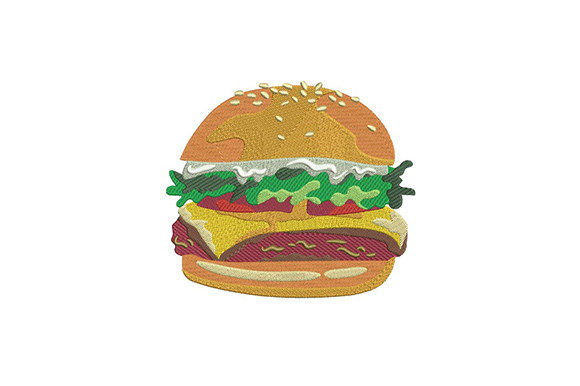
When I first opened the Cheese Burger embroidery file in my digitizing software, I immediately noticed its playful, bold personality. This is not a stiff, overly realistic food illustration. It reads as friendly, approachable, and slightly nostalgic — the kind of graphic that makes someone smile before they even realize why. For a machine embroidery design aimed at small business merch, that emotional hook matters more than thread count.
The composition suggests a classic burger stack: layered ingredients, a rounded bun top, and details that give the design depth without becoming cluttered. The visual weight feels balanced. Nothing appears overly dense or under-stitched at first glance. This is exactly the type of design I would test immediately on scrap fabric to see how it behaves under the needle.
What stands out most is the versatility baked into the concept. A cheeseburger isn't just food. It's a cultural shorthand for comfort, indulgence, casual dining, and Americana. That makes Cheese Burger surprisingly flexible for branding — from a barbecue joint's cap embroidery to a handmade shop's tote bag accent.
How Cheese Burger Fits Into Real Business Use
I've spent years helping small businesses choose embroidery files that do more than look good on a screen. The real question is always: will this design sell product, strengthen brand identity, and hold up to repeated wear and washing? Here's how I see Cheese Burger performing across common business applications.
Embroidered Patches for Retail and Branding
Patch production is one of the first places I'd take this design. A well-digitized embroidered patch featuring Cheese Burger could become a signature item for a café, diner, food truck, or streetwear brand. Patches sell easily as standalone products on Etsy, at market stalls, or pinned to merchandise displays. The key is ensuring the patch size works — I'd test the design at 2.5 inches and 3 inches wide and compare the detail retention. Small ingredients like lettuce frills or sesame seeds can blur if scaling isn't handled carefully.
Apron Embroidery for Staff Uniforms
For bakeries, burger spots, florists who want a quirky touch, or even pet brands using food puns, Cheese Burger stitched onto an apron chest creates instant personality. I recommend placing the design on the upper left chest or centered on a bib apron. The stitch density needs to be appropriate for the apron fabric — canvas and denim handle dense embroidery well, but lighter cotton aprons require proper stabilizer to prevent puckering around the design edges.
Cap Embroidery and Curved Surface Challenges
Cap embroidery is demanding. The curved surface distorts flat artwork, and designs with wide horizontal elements can lift at the edges. With Cheese Burger, the rounded shape of the burger bun actually helps. A circular or oval composition tends to wrap a cap front more naturally than a rectangular logo. I would still test this on a structured six-panel cap before committing to a bulk order. The center seam on some caps can disrupt the design if placement isn't precise.
Tote Bag Design and Fabric Considerations
A tote bag design featuring Cheese Burger opens up opportunities for grocery store promotions, gift-with-purchase programs, and boutique shopping bags. Canvas tote bags with a clean embroidered burger graphic convey quality and thoughtfulness. One important note: textured or loosely woven fabrics need a topper or water-soluble stabilizer on top to prevent stitches from sinking in. I've seen too many designs lose their crisp outline because someone skipped this step on a natural fiber tote.
Work Shirts, Sleeve Details, and Chest Accents
For a small business uniform — think a diner or a creative studio — Cheese Burger works beautifully as a sleeve detail or a small left-chest accent. It's memorable without being overwhelming. The trick is keeping the placement consistent across all garments. I use a placement template and mark each shirt individually rather than eyeballing it. A quarter-inch variation on a chest logo is noticeable to customers, even if they can't articulate why something feels off.
Where Design Caution Is Needed
Not every placement suits this design equally. Based on years of production experience, here are the scenarios where I'd exercise extra care with Cheese Burger.
- Very small patch sizes — Below 2 inches, fine details in the burger layers may merge or become unreadable. Always run a stitch-out at the intended size first.
- Dark uniform fabrics — If the thread colors contrast poorly with a black or navy shirt, the design loses impact. Test thread color swatches on the exact garment color before production.
- High stretch performance wear — Stretchy polyester blends require a different stabilizer approach. The design may need adjustments to stitch angles to prevent distortion when the fabric is worn.
- Frequent industrial washing — Restaurants and food service businesses wash uniforms aggressively. Confirm that your thread choice and backing material can survive high-heat drying cycles without fraying or fading.
- Curved surfaces with tight radii — Slim caps, children's hats, or narrow bag straps can distort the design's outer edges. Always test on the final product, not just on flat fabric.
How Cheese Burger Affects Brand Identity and Customer Perception
Embroidery communicates permanence. Unlike a screen-printed graphic that fades, a stitched design signals investment and quality. When a customer sees Cheese Burger embroidered on a café apron or a boutique tote bag, several things happen subconsciously.
First, the tactile texture of thread creates a handmade product impression — even when produced commercially. This aligns perfectly with brands that want to feel artisanal, local, or craft-oriented. Second, consistency in embroidery across different merchandise items builds brand identity faster than most owners expect. A burger graphic that appears on the cap, the apron, and the gift bag ties the entire customer experience together.
Third, embroidery on custom apparel increases the perceived value of the item. A plain tote bag might sell for twelve dollars. The same tote with a clean, well-executed Cheese Burger embroidery can command eighteen to twenty-five dollars. That margin matters for small businesses operating on tight budgets.
For Etsy sellers and product designers, this design becomes part of a larger set of design assets. Pairing Cheese Burger with complementary food-themed embroidery files creates a cohesive product line that encourages multiple purchases from the same customer.
Practical Designer Notes and Production Recommendations
Before stitching Cheese Burger for a client order or your own merchandise line, run through this checklist. I follow these steps for every new digital embroidery file I work with, and they have saved me from costly mistakes more than once.
- Test in black and white first. Run a single-color stitch-out to check the design's structural integrity. If it reads clearly without color, you have a strong foundation. If the shapes become confusing, the color mapping or stitch direction may need evaluation.
- Stitch at intended patch size. Never assume a design that works at 4 inches will look good at 2 inches. Thread density changes, small satin stitches can become bulky, and fine details disappear. Test at the exact dimensions you plan to sell.
- Review thread color contrast. Match thread swatches against your fabric under the lighting conditions where the finished product will be seen — retail display lighting, outdoor market sunlight, or indoor café lighting all render color differently.
- Inspect spacing and pull compensation. Open the embroidery file in your software and look at the stitch angles, density, and pull compensation settings. Adjust for the specific fabric type you'll use. What works on twill may not work on fleece.
- Confirm hoop size compatibility. Check that the design fits comfortably within your available hoop sizes with adequate clearance for the hoop's inner edge. A design that barely fits invites alignment problems.
- Use proper stabilizer for the fabric. Cut-away stabilizer for knits and stretch fabrics, tear-away for stable wovens, and a topper for textured or napped fabrics like fleece or towel material.
- Create a mockup for client approval. A printable mockup or digital preview helps clients visualize placement and size before you commit thread to fabric. I generate mockups showing the design on the actual garment or product.
- Compare beside other brand assets. If the client has existing logos, typography, or design elements, check that Cheese Burger feels cohesive alongside them. Clashing styles weaken brand consistency.
Commercial Use and Licensing Awareness
Before using Cheese Burger for any commercial embroidery project, verify the licensing terms provided with the purchase. Most embroidery design sellers define specific usage rights — some allow unlimited commercial use on finished products, others restrict the number of items or prohibit reselling the file itself. Read the included documentation. If the product description does not specify stitch count, file formats, hoop size requirements, or licensing scope, contact the seller directly before beginning production for a client.
This step protects your business from legal headaches and ensures the designer who created Cheese Burger receives proper credit under their terms. It also builds professional trust with your own customers when you can confidently state that all your embroidered merchandise uses properly licensed artwork.
Final Thoughts From the Stitch Room
After evaluating Cheese Burger from the perspective of a working embroidery professional, I see a design with genuine business potential. It brings personality without sacrificing wearability. It scales reasonably well across common merchandise formats. It taps into a universally recognized theme that fits food businesses, gift brands, and lifestyle products equally well.
The success of any machine embroidery design ultimately depends on thoughtful execution. Test it thoroughly. Match it to the right fabric, stabilizer, and placement. Present it as part of a cohesive product line. When those pieces align, a design like Cheese Burger transforms from a simple stitched graphic into a recognizable brand element that customers associate with quality, care, and a memorable experience.
For small business owners building a merchandise identity — whether through aprons, caps, patches, or tote bags — this design deserves a spot on your test list. Stitch it out, see how it holds up, and imagine it representing your brand on a busy Saturday morning or at a packed market stall. Chances are, it'll deliver exactly the friendly, professional impression you want to stitch into every finished product.