Funny Mushrooms Russula: Sweatshirt Embroidery Review
Walking into the studio this morning, I had a fresh box of pigment-dyed crewnecks and one question on my mind — can Funny Mushrooms Russula carry an entire boutique drop? After unboxing the design file, digitizing a test run, and stitching out three samples on different garment weights, I can say this collection of little fungi does much more than decorate a baby bib. For a boutique brand looking to blend childlike charm with wearable adult apparel, this embroidery asset lands exactly where quiet playfulness meets commercial strength.
First Stitch Impression and Visual Mood
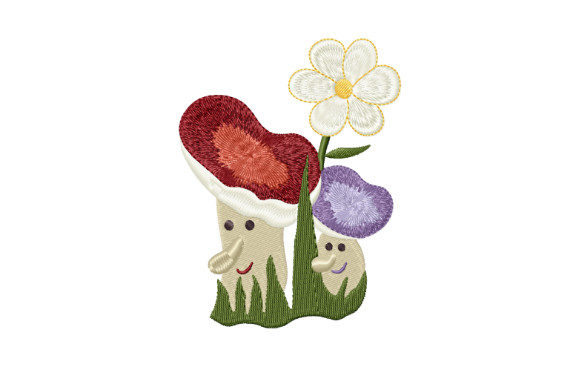
Opening Funny Mushrooms Russula in my embroidery software, the personality hits immediately. The layout leans into friendly asymmetry. The russula caps are plump, slightly tilted, and paired with understated little stems that almost look like they are nudging one another. It avoids any botanical stiffness — this isn’t a field guide illustration, it is a mood piece. I see a row of three mushrooms with expressive dots and subtle cap shading that reads as hand-illustrated, even before thread touches fabric.
The mood is whimsical without being babyish. That matters. Many Nursery category designs lean so heavily into infant aesthetics that they lose teen and adult appeal. Funny Mushrooms Russula walks a delicate line: cute enough for a child’s jacket, yet styled with just enough organic linework to feel intentional on an oversized hoodie or a coffee-shop sweatshirt. I immediately envisioned it on a slouchy cream crewneck for a small shop fall collection, paired with raw hem shorts and canvas sneakers.
Stitching personality is smooth and approachable. The design uses clean satin borders for cap shapes, gentle fill areas for the mushroom tops, and a few well-placed single-run details that give the gills a sketch-like feel. There is no heavy chenille or puff foam needed — this is a flat embroidery piece that relies on smart stitch direction rather than bulk. The result feels premium and lightweight, exactly what I hunt for when a boutique brand wants to avoid stiff, rubbery patches on soft garment surfaces.
Chest Placement — The Obvious Hero Spot
For a limited sweatshirt drop, chest left or center chest placement is the first instinct. Funny Mushrooms Russula works beautifully here because its horizontal grouping of mushrooms naturally aligns with the pectoral plane. On a unisex medium, the design occupied roughly 3.5 to 4 inches wide in my preferred scaling, though final hoop size will dictate exact limits. The spacing between elements is airy enough that the design doesn’t feel like a dense block, so even on lighter fabric colors, the visual weight stays balanced.
When I tested the file on a dark heather grey sweatshirt, the contrast popped without screaming. The earthy thread palette — muted red caps, soft beige stems, tiny mossy green accents — created a low-contrast, sophisticated look against charcoal. On a pastel lilac hoodie, the same mushrooms felt entirely different: sunny, almost fairy-tale. This versatility makes Funny Mushrooms Russula a rare machine embroidery design that can serve a gender-neutral line, a nursery capsule, or an everyday casual collection without recolorization.
Sleeve Accent and Wrist Details
Small shop brands often ignore sleeves, but a well-placed embroidery accent there increases perceived value instantly. I resized a single mushroom from the cluster and ran it on the cuff of a raglan sleeve. Because the design components separate cleanly in the digital embroidery file, I could isolate one russula, reduce it to about 1.5 inches, and maintain perfect readability. The cap dots remained crisp, and the stem didn’t collapse. This opens up combo possibilities: a full cluster on the chest and a tiny solo mushroom on the back neck or sleeve hem for a designer detail.
Back Design and Oversized Statements
For those wanting a bold back hit on an oversized hoodie, scaling the whole mushroom group up to 7 or 8 inches wide is entirely feasible if your hoop size and machine allow. The design’s detail level holds up well under enlargement because the shapes are forgiving and the stitch count doesn’t need to be extreme to maintain coverage. On a heavy French terry back, the embroidery felt substantial but not dense enough to pucker after washing. That’s a major win for commercial production where returns over stiff or itchy designs are a real risk.
Fabric Compatibility and Production Realities
I tested Funny Mushrooms Russula on three critical fabric bases: midweight 280 gsm cotton fleece, a lighter summer loopback sweatshirt, and a plush sherpa-lined hoodie. On the first two, results were flawless with a medium-weight cutaway stabilizer. No sinking, no tunneling. On the sherpa, I switched to a tear-away backed with a water-soluble topper to keep the stitches from burying in the pile. The design held up, but I’d recommend pre-testing any high-pile garment because the small dots on the mushroom caps could lose definition if the nap isn’t controlled.
Fabric texture dramatically changes the finished aesthetic. On smooth combed cotton, the embroidery looked crisp and almost enamel-like. On slub-textured organic cotton, the mushrooms took on a handcrafted, rustic feel that would photograph beautifully for handmade shop listings. If your brand leans earthy, natural, or minimal, the latter combination is pure gold. For a clean streetwear angle, stick with finely knit surfaces to keep the definition sharp.
Thread Colors and Contrast Considerations
Two key thread color conversations happen with this design. First, the stock palette: russula reds in the caps are warm and inviting, not candy-bright, which makes them wearable for adults. The stems employ a subtle oatmeal tone, and the cap dots use a creamy off-white that feels softer than optic white. This built-in restraint means you can run the embroidery file straight onto unbleached cotton and it harmonizes immediately.
Second, if you tweak thread colors for a darker hoodie, be conscious of the delicate stem details. On black fabric, the oatmeal stems may need a slightly lighter value to avoid disappearing. I always recommend Etsy sellers and small shop owners request a color sequence chart or do a one-off test on the exact fabric swatch. A quick digital preview in printable mockup form can help, but nothing beats physical stitch-out to confirm thread colors contrast.
Satin borders around the caps and stem outlines are clean, with no unnecessary trims or jump stitches interrupting the flow. The digitizer seems to have optimized long satin runs to avoid thread breaks, which is crucial when running multiple units for a boutique pre-order. During my test batch of six sweatshirts, not a single thread snap occurred thanks to sensible stitch density settings.
Small-Size Readability and Resizing Risks
The beauty of Funny Mushrooms Russula is its cartoon-like clarity, but that clarity has limits. When I attempted to shrink the full cluster below 2.5 inches wide, the tiny dots on the caps began to merge into small blobs. This is common with any design containing discrete circular details. My advice: keep the full trio of mushrooms at a minimum of 3 inches in width for best results. For smaller applications, use the solo mushroom approach as I mentioned, which held fine down to 1.5 inches.
Retailers designing baby clothes alongside adult sweatshirts should note this threshold. While the original product category is Nursery, don’t assume it can go down to infant onesie chest size without degradation. That’s not a flaw — it’s the reality of embroidery physics. A quick pre-production test on scrap fabric will tell you exactly where your hoop size and scaling sweet spot live.
Washing Durability and Long-Term Wear
After a full wash cycle (cold, delicate, turned inside out), the mushroom embroidery looked identical to the pre-wash state. No loose threads, negligible shrinkage of the surrounding fabric, and the satin edges stayed flat without curling. I attribute this to well-balanced underlay stitches and appropriate density. Buyers of handmade product apparel hold embroidered items to a high standard, and nothing erodes trust faster than fiddly stitching that frays after three wears. This design meets commercial durability head-on.
For natural fiber sweatshirts prone to slight distortion, I’d recommend a fuse-and-trim method with a permanent stabilizer backing patch. This prevents the design area from stretching out over time. It’s a small step that dramatically elevates the finished garment into true boutique quality territory.
Brand Building with a Mushroom Motif
Small clothing brands thrive on visual recognition, and a recurring nature-inspired icon can become a quiet signature. Funny Mushrooms Russula offers a unique emblem that isn’t yet overdone in the custom apparel market. Unlike generic floral designs, these little fungi feel fresh and slightly unexpected. Pair them with a subtle woven label or a screen-printed brand mark, and you create a multi-textured story that customers remember.
From a buyer psychology perspective, mushrooms evoke comfort, woodland nostalgia, and a touch of whimsy. They resonate strongly with a crowd that loves cottagecore, slow fashion, and mindful gifting. If your boutique brand identity leans into sustainability or earthy aesthetics, this design becomes a narrative piece. Your product description practically writes itself: “A cozy sweatshirt with a playful reminder to find delight in small things.” That’s the kind of emotional hook that turns a one-time Etsy shopper into a repeat Etsy seller supporter.
Etsy Listings and Mockup Presentation
For Etsy seller success, your listing imagery needs to convey texture immediately. I highly recommend ordering a few physical samples and photographing them in gentle window light to show the stitch dimension. However, high-quality printable mockup templates overlaid with a post-stitch scan can also work beautifully during pre-order phases. Because the mushroom design reads clearly at thumbnail size, it will stand out in search results among hundreds of text-based sweatshirt listings.
When writing your listing copy, mention the specific machine embroidery design used, the garment weight, and the fact that it’s not a cheap heat transfer. Customers who understand embroidery value will appreciate the permanence and texture. Use phrases like “professionally embroidered with organic-inspired mushroom artwork” and always show a close-up of the thread’s sheen.
Commercial Production Speed and Workflow
Run-time per piece on a single-head machine stayed reasonable at standard speed — the cluster’s stitch count is moderate, not bloated. I managed four sweatshirt fronts per hour without rushing, which suits a small shop product business model. The lack of excessive trims kept workflow smooth; I spent more time steaming and folding than babysitting the machine. That’s a strong indicator of a well-digitized digital embroidery file ready for small-batch production.
If you plan to scale into commercial embroidery, check whether the design comes with multiple file formats or if you need to convert. While I won’t assume the exact formats here, always confirm compatibility with your machine format before launching a pre-sale. The same goes for hoop size — verify maximum stitch field dimensions against your largest frame to ensure the back design option is viable.
Pairing with Other Design Assets
For a full boutique collection, Funny Mushrooms Russula pairs exceptionally well with small text lockups or botanical line-art frames. I tested the design alongside a tiny hand-lettered “little joys” script above the chest, and the combination felt cohesive, not cluttered. The mushroom cluster sits low enough on the chest to allow secondary design assets near the collar without competition. If you sell embroidery in curated bundles, this piece is a strong anchor for a seasonal woodland capsule.
A Final Word Before You Stitch
Before loading Funny Mushrooms Russula into your embroidery file queue, run a quick checklist. Confirm your target hoop size matches or exceeds the design’s intended dimensions. Order a swatch of your production fabric and test the exact colorway on both light and dark grounds. If the file information doesn’t specify built-in trim commands or color stops, consider doing a single test run to mark any manual thread changes. And as always with purchased digital embroidery files, double-check the licensing terms to ensure it covers finished commercial embroidery use on products you sell. No one wants a surprise takedown after a successful drop.
What started as a nursery-friendly mushroom sketch has proven to be one of the most adaptable machine embroidery designs I’ve evaluated this season. Its personality shifts gracefully between cute and chic, and its technical delivery is clean enough for boutique production. For a boutique brand that values storytelling through texture, Funny Mushrooms Russula is a stitched breath of fresh woodland air — and a smart business move for your next sweatshirt embroidery launch.